A friend of mine was viewing my new website and blog and mentioned that they had never heard of Hollywood Parade which was one of the photos I had taken and featured on the main page. I said that was exactly why I was determined to write about these lost bits of history. They are everywhere and often overlooked.
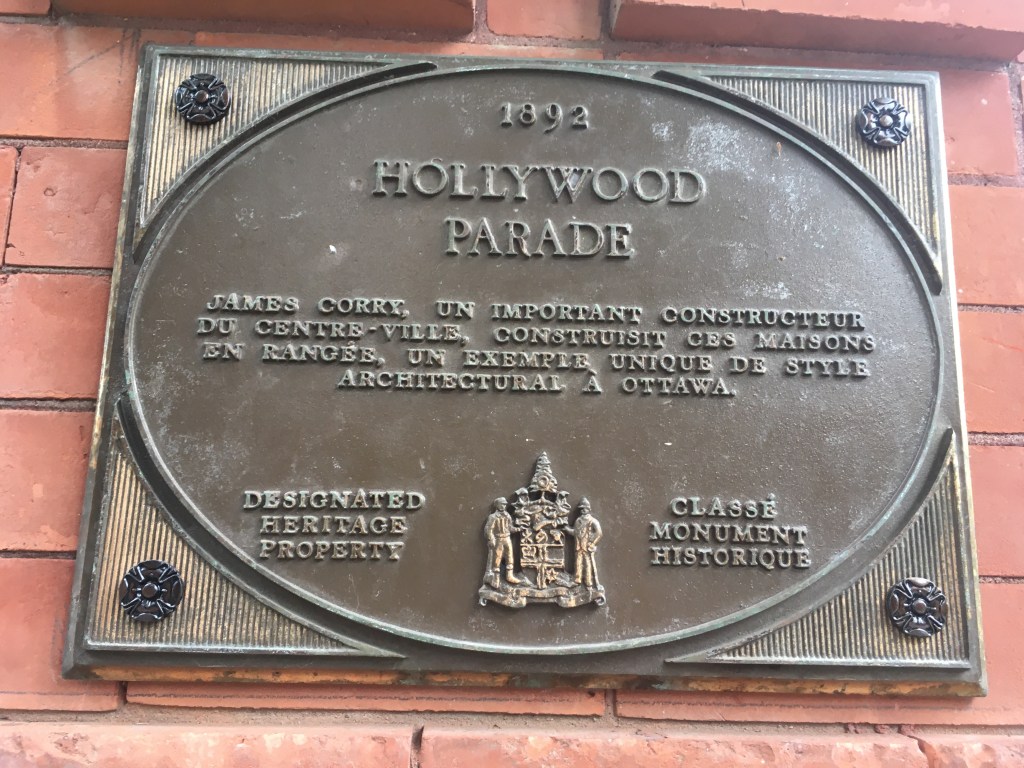
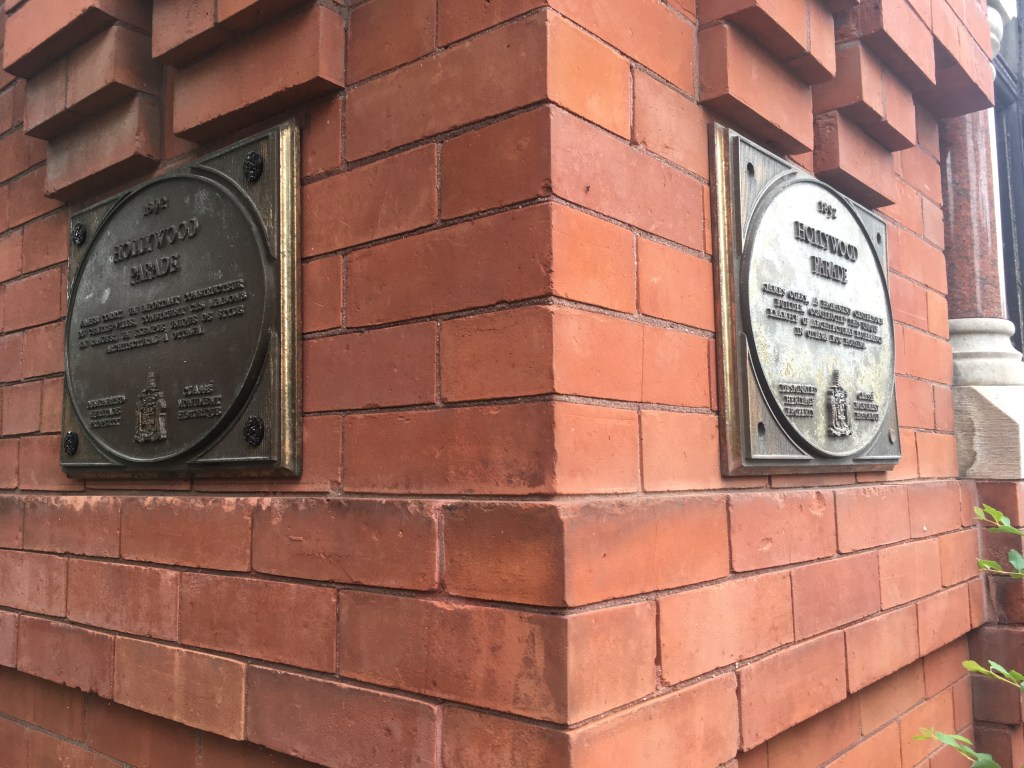
The plaque for “Hollywood Parade” and its 1892 cornerstone is at 113 James Street (and Lyon) in Ottawa. It is a Designated Heritage property. I will follow up with another post as to what that means and entails. But at the moment it means it is a nice old place in the center of Ottawa.
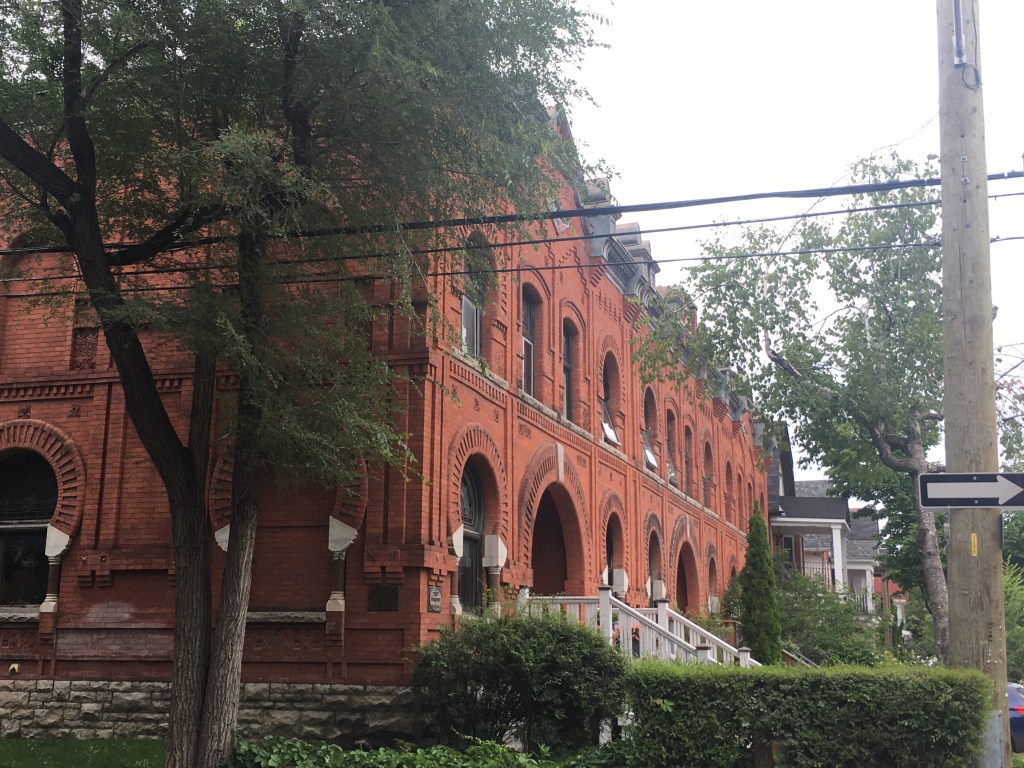
I had seen this almost 130 year-old property earlier on walks. The red brick detail on the rowhouse is eyecatching. I am not well versed in architecture but it is described as the “Romanesque Revival” style. It was featured in the 1998 Citizen Homes section and I feel that this sort of detail and craftsmanship isn’t incorporated into our modern homes. James A. Corry was the architect, builder and one of the original inhabitants of the six-unit row house. The rather grandiose name and its history remain a secret although it has been suggested that it was selected in order to give it higher aspirations than what was considered common row housing to the upper classes. Bytowne museum has suggested that it is meant as holly wood, to indicate nature, as present-day developments such as Deer Fields, try to imply.
In 1892 James Corry ran for the Wellington Ward alderman position, where he describes himself as being a resident of the ward for a number of years “with considerable interest therein.” He is found arguing in the paper for wooden sidewalks (and denied) on neighbouring Florence street. There is an Ottawa Journal article in 1903 referring to ex-alderman James A. Corry, as the owner of land purchased on Rideau street to build office buildings, as well as other Ottawa projects. He died at the age of 65 on December 17, 1923.
 Plaques, Statues and Cornerstones